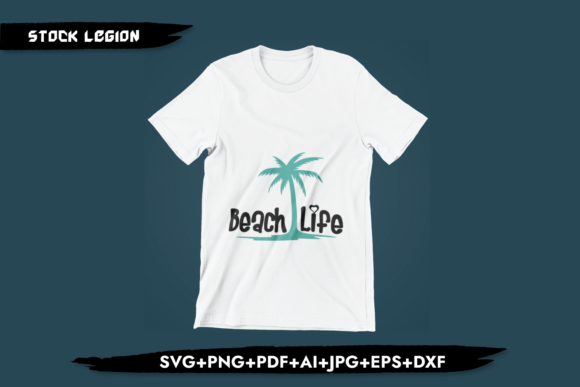
Beach Life Graphics for T-Shirt Designs Review
When you are building a seasonal product collection and the summer selling window is approaching fast, every asset you add to your workflow needs to earn its place. I downloaded Beach Life during a late-night sourcing session while preparing a Coastal Summer bundle for three different platforms, and I spent the next morning testing it across the actual product types my shops rely on. This is not a passive collection of beach-themed illustrations. It is a tightly packaged set of graphic design assets that arrives ready to work, but only if you understand where it performs best and where it needs a little creative restraint.
The first thing that struck me when I unzipped the folder was how clean the file organization felt. Beach Life is delivered as a single ZIP file containing smooth, professional SVG cutting files and high-resolution PNG designs at 6 by 6 inches with 300 dpi and a transparent background. For anyone who has downloaded graphic bundles that dump thirty unnamed files into a messy folder, the simplicity here matters. You can pull these directly into Cricut Design Space, Photoshop, Illustrator, or Canva without spending twenty minutes renaming layers or hunting for the right format. From a seller's perspective, that kind of file readiness translates into fewer production delays and faster listing creation when you are trying to launch a themed collection before the seasonal demand peaks.
First Impressions and the Summer Shop Reset
The visual personality of Beach Life sits somewhere between playful coastal charm and clean, modern illustration. The designs lean into a breezy, vacation-ready aesthetic without feeling cartoonish or overly niche. I tested the graphics across mockup previews for beach bags, unisex t-shirts, children's apparel, and printable wall art. On every mockup, the designs read clearly at thumbnail size, which is one of the first practical tests I run before committing to any digital product asset. If a design cannot communicate its mood in a 200-pixel Etsy thumbnail, it will struggle to generate clicks regardless of how beautiful it looks at full resolution.
For sellers operating in the print-on-demand space, Beach Life offers a graphic style that can bridge multiple buyer personas. A minimalist coastal design can attract the modern home decor shopper. A bold, playful beach graphic can appeal to a family vacation t-shirt buyer. A slightly rustic or hand-drawn variation can work for a boho-inspired sticker design or a scrapbooking kit. The range within the bundle is not massive, but the cohesion across the files means you can build a recognizable brand identity across several product categories without the collection feeling disjointed. That consistency is valuable when you are trying to establish visual trust with repeat customers across a creative marketplace.
Testing Across Real Product Categories
I ran Beach Life through a structured testing process that I use for any graphic design asset before publishing finished products. The goal was to evaluate performance across the formats that generate the most revenue for my shops: t-shirt designs, sublimation transfers, printable wall art, planner stickers, greeting cards, tote bag prints, and tumbler wraps. Here is what I found.
On t-shirt designs, the SVG files performed exceptionally well. The cut lines were clean when imported into Cricut Design Space and Silhouette Studio, with no unexpected open paths or jagged nodes that sometimes plague free or poorly optimized cutting files. When I tested a heat transfer vinyl application on a cotton unisex tee, the design pressed smoothly and held detail at the recommended 6-inch dimension. Scaling up slightly for a larger shirt print did not introduce noticeable degradation, though I would be cautious about pushing these graphics beyond 8 to 9 inches without checking the vector integrity of each individual file first.
For sublimation designs, the 300 dpi PNG files with transparent backgrounds dropped directly into my templates without needing additional cleanup. I tested a tumbler wrap layout with a soft watercolor-style background and a bold beach graphic layered on top. The transparency handled the overlay cleanly, and the colors printed accurately on a mid-range sublimation printer with standard ICC profiles. One practical note for sellers who print mugs and tumblers: test the contrast on curved surfaces. A design that looks balanced on a flat mockup can feel visually heavy on a tapered mug if the focal element sits too low or too high in the composition.
The printable products category is where Beach Life surprised me most. I created a quick printable wall art set using the PNG files placed on a textured linen background, and the 6x6 square format worked naturally for a gallery wall collection. For planner stickers, I sized several designs down to roughly 1.5 inches and printed on matte sticker paper. The detail held up, though I would avoid shrinking the more intricate designs below one inch for kiss-cut sticker sheets, as some of the finer line work begins to lose clarity at very small scales. If your primary product line is tiny sticker details or miniature journal embellishments, select the simpler designs from the bundle and leave the complex compositions for larger applications.
Where the Asset Performs Best
After a full afternoon of testing, I identified the product categories where Beach Life genuinely shines. The sweet spot for this graphic collection is in large product previews and decorative layouts. When a design has room to breathe—on a tote bag centerpiece, a throw pillow mockup, a framed art print, or the front of a beach hoodie—the visual impact is immediate and professional. The transparent backgrounds mean you can layer these graphics over textured backgrounds, gradient overlays, or photographic scenes without wrestling with clipping paths or manual background removal.
This collection also works exceptionally well inside themed bundles and seasonal collections. If you are building a "Summer Vibes" digital download pack for Etsy or Creative Fabrica, Beach Life can serve as the visual anchor around which you arrange coordinating patterns, watercolor textures, and typography elements. The designs are versatile enough to pair with a serif font for an elegant coastal wedding invitation template, a bold sans serif for a modern beach club t-shirt, a flowing script font for a feminine planner sticker line, or a playful handwritten font for a children's party printable. I tested all four font pairings during my review, and the graphics adapted without clashing or losing their visual identity.
Another strong use case is social media graphics and promotional visuals. For sellers who market their products on Instagram, Pinterest, or TikTok, having a consistent set of graphic design elements to build branded promotional images can increase perceived value and streamline content creation. I used one of the Beach Life designs as a decorative accent in a Canva template for a summer sale announcement, and the graphic added enough seasonal personality to make the post feel intentional rather than generic stock imagery. Content creators and bloggers in the lifestyle and travel niches could similarly use these graphics to create cohesive visual storytelling across multiple platforms.
Where Caution Is Needed
No graphic asset is universally perfect, and Beach Life has practical limitations that sellers should account for before uploading finished products. The most important caution concerns tiny sticker details and overly complex layouts. As I mentioned earlier, intricate designs with fine internal lines or small floating elements can become difficult to weed when cut on a Cricut or Silhouette machine at small sizes. If your product line depends heavily on miniature die-cut stickers or delicate vinyl decals, test the cut quality on your specific machine and material combination before listing. What cuts cleanly on one blade setting can tear or lift on another.
I would also recommend careful testing for dark backgrounds and weak contrast situations. Several designs in the bundle feature lighter, airy color palettes typical of beach-themed artwork. On a white or cream product surface, they look balanced and intentional. On a black t-shirt or a dark navy tote bag, some of the softer elements may lose visibility unless you adjust the composition or add a contrasting background shape behind the graphic. This is not a flaw in the asset itself—it is a design constraint that applies to many light-colored illustrations. But it is worth flagging because marketplace buyers do not always visualize how a design will translate from a bright mockup screen to a physically printed dark garment.
Sellers creating text-heavy templates or crowded thumbnail designs should also use restraint. The Beach Life graphics carry their own visual weight, and layering them behind dense typography or inside a busy promotional layout can create visual confusion rather than enhance the message. I tested one design as a background element for a product listing thumbnail with multiple text overlays, and the result felt cluttered. When I simplified the layout and let the graphic occupy its own clear space, the thumbnail immediately looked more professional and clickable. For marketplace listings where the thumbnail is the primary conversion driver, that clarity can make a measurable difference in click-through potential.
Practical Seller Workflow and Testing Notes
If you plan to use Beach Life for commercial product creation, I recommend running a structured pre-publishing checklist. Start by testing the design on real mockups across at least three different product types—do not rely on a single t-shirt mockup and assume the graphic will translate equally well to a mug or a canvas tote. Preview the design as a small marketplace thumbnail to confirm it reads clearly at reduced size. Check how the colors print on your specific equipment, as screen calibration varies and what looks vibrant on a monitor can print slightly muted depending on your printer and substrate. Verify that PNG transparency is fully intact by placing the graphic on both a white background and a dark background. Inspect the SVG cut quality by running a test cut on the vinyl or paper stock you actually sell, not just a preview in design software.
File organization matters for customer experience. Even though the download arrives cleanly packaged, I always rename files to match my internal product system and create a customer-facing folder structure that is easy to navigate. When a buyer receives a digital download, they should not have to guess which files are for cutting and which are for printing. Clear labeling reduces post-purchase confusion and lowers the likelihood of refund requests or negative reviews based on user error rather than product quality.
Before selling finished products created with Beach Life, confirm that your commercial license covers your intended use. Most graphic design assets marketed for t-shirt designs and printable products include a standard commercial license for physical end products, but the scope can vary. Check whether the license permits use on print-on-demand platforms, whether there are quantity restrictions on physical product sales, and whether reselling or redistributing the raw digital files in any form is prohibited. This is standard due diligence for any digital product creator, and it protects both your business and the original designer's rights.
Is Beach Life a Worthwhile Addition to a Seller's Toolkit
For the right seller and the right product categories, Beach Life is a practical, well-prepared graphic design asset that can anchor a seasonal product launch or fill a gap in a coastal-themed collection. The strength of this bundle lies in its clean file preparation, its versatile aesthetic, and its ability to work across t-shirt designs, printable wall art, sublimation products, and decorative digital downloads without requiring extensive reworking. The transparent backgrounds and 300 dpi resolution meet the technical standards that professional sellers need, and the SVG cut quality is reliable for vinyl and paper crafting applications at the recommended dimensions.
I would not position Beach Life as a universal solution for every product type in a shop. Sellers who specialize in ultra-small sticker sheets, intricate multi-layer vinyl decals, or text-dominant template designs may find that only a portion of the files suit their specific production constraints. But for a creative entrepreneur building out a summer collection of t-shirt graphics, tote bag prints, nursery wall art, mug designs, or social media templates, this collection offers enough visual range and technical quality to justify its place in a commercial design workflow. Test it on your own mockups, pair it intentionally with fonts that match your brand voice, and let it breathe inside clean, uncluttered layouts. When used with that kind of practical discipline, Beach Life can help your product listings feel more polished, cohesive, and seasonally relevant—which is exactly what buyers in a competitive creative marketplace are scrolling for.