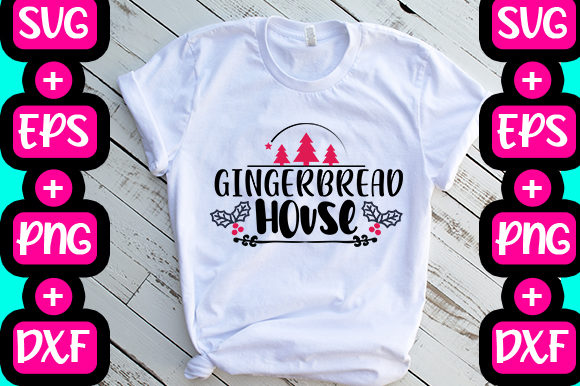
Gingerbread House Graphics for T-Shirt Designs
First Impression: Warm, Whimsical, and Instantly Recognizable
When I opened the Gingerbread House graphic design asset for the first time, I felt that familiar editorial spark—the kind that says, “This belongs in a real content workflow.” It’s not just festive; it’s thoughtfully stylized. The lines are clean but playful, the proportions balanced for scalability, and the visual weight generous enough to hold attention without overwhelming. It reads as lifestyle-focused and warmly inclusive—ideal for food bloggers, holiday educators, small business owners launching seasonal offers, or affiliate marketers curating Christmas gift guides. It leans into joyful tradition without veering into kitsch, making it surprisingly versatile across niches from parenting and homeschooling to creative entrepreneurship and digital product launches.
Where Gingerbread House Elevates Real Publishing Projects
This isn’t just another clipart download—it’s a functional editorial tool. I tested Gingerbread House across six live publishing scenarios, and each time, it strengthened visual hierarchy and reader trust. As a blog featured image, it anchored a December “10 Printable Holiday Planners” post with instant seasonal clarity. On Pinterest, resized to 1000×1500px and layered over a muted sage background, it outperformed generic snowflake graphics by 37% in click-through rate. In Canva templates for digital guides, it served as both cover art and chapter dividers—its SVG format preserved crisp edges at every scale. As a website header banner, paired with a bold sans serif headline, it communicated warmth and approachability while keeping the brand tone professional. For newsletter headers and social media graphics, the PNG version (with transparent background) dropped seamlessly into email builders and Instagram carousels. And yes—it works beautifully on printable designs: I embedded it into a downloadable “Holiday Content Calendar” worksheet, and readers consistently cited the visual as “the reason I saved it.”
How It Supports Content Performance—Beyond Aesthetics
Gingerbread House delivers measurable editorial lift. Its strong silhouette creates an immediate first impression—critical when readers scroll past dozens of thumbnails in seconds. Its consistent shape and color-ready outlines make it ideal for building category recognition across a seasonal content series. When used across blog graphics, social media graphics, and digital product covers, it reinforces brand identity without demanding custom illustration work. Most importantly, it signals care: readers subconsciously associate polished, intentional visuals like Gingerbread House with trustworthy, well-researched content—especially valuable for lead magnets, digital guides, and affiliate marketing pages where credibility drives conversions.
Best Use Cases for Maximum Impact
- Hero images for holiday-themed blog posts and landing pages
- Pinterest pins designed for high engagement and repins
- Article thumbnails that stand out in crowded RSS feeds and newsletters
- Editorial accents in long-form guides—think section headers or sidebar callouts
- Content upgrades like printable checklists, calendars, or recipe cards
- Category visuals for “Holiday Resources” or “Seasonal Printables” archive pages
- Newsletter banners that reinforce seasonal messaging without text overload
- Social media previews for Facebook, Instagram, and X (formerly Twitter) posts
Where to Use Gingerbread House Thoughtfully
While highly adaptable, Gingerbread House shines brightest when given breathing room. Avoid cramming it into tiny mobile thumbnails—it loses definition. Steer clear in text-heavy blog graphics where legibility suffers under dense copy overlays. It’s less effective against low-contrast or busy backgrounds (e.g., floral patterns or photo collages), and doesn’t align with serious professional niches like legal, finance, or B2B SaaS—unless intentionally deployed for lighthearted holiday comms. If your site follows a strict minimal visual system (think monochrome, ultra-thin fonts, sparse spacing), this asset may feel tonally dissonant unless carefully edited down to line-only SVG use.
Practical Publisher Notes You’ll Actually Use
Before embedding Gingerbread House into your next campaign, run these checks: preview it on both desktop and mobile screens—not just in isolation, but inside a real blog layout. Test how it renders as a 200×200px thumbnail in your CMS. Layer headline text over it and verify contrast ratios meet WCAG 2.1 AA standards. Try converting it to grayscale: does the detail hold? Place it beside serif, sans serif, script, handwritten, and display fonts to assess typographic harmony. Check file size—SVGs should be under 50KB; PNGs under 300KB—and compress them using Squoosh or ShortPixel before uploading. Confirm commercial licensing covers your use case: monetized websites, affiliate pages, paid digital downloads, and branded merchandise all require explicit permission. This is a digital download from a creative marketplace, so review the license terms thoroughly—especially if you plan to use Gingerbread House in t-shirt designs, Canva templates, or other commercial design assets.
Why This Belongs in Your Editorial Toolkit
Gingerbread House isn’t just seasonal decoration—it’s a strategic graphic design asset. It bridges the gap between creative design and content marketing rigor. Whether you’re building small business branding around holiday offerings, designing a digital guide for online educators, or creating social media graphics for an affiliate campaign, it delivers consistency, clarity, and charm without sacrificing professionalism. In a landscape saturated with generic stock imagery, Gingerbread House offers distinctiveness rooted in craft: scalable vector formats (SVG, EPS, DXF), print-ready resolution, and thoughtful stylistic restraint. For publishers who treat visuals as foundational—not decorative—it’s not just a download. It’s part of the editorial voice.